
TOP
 Home > News
2026-04-07
The Asia-Pacific region has emerged as a dominant force in optical switching technology, with Japan and South Korea leading innovative developments spanning quantum communication, AI infrastructure, and telecommunications. These two nations—leveraging strong research ecosystems, robust semiconductor manufacturing capabilities, and aggressive government support for optical communication technology—have achieved breakthroughs that position them at the forefront of next-generation photonic networks.
According to Guangxi Keyi Optical Communication Technology Co., Ltd. (www.coreray.com), Japan and South Korean optical switch innovations represent some of the most significant technological advances of 2025. From Waseda University's revolutionary germanium thin-film multi-color optical switches to KAIST's ultra-fast silicon photonics solutions for AI data centers, these nations are demonstrating leadership across multiple cutting-edge domains.
This comprehensive analysis explores optical switching breakthroughs from Japan and South Korea, examining academic research, commercial product development, and strategic applications in next-generation networks.
Japan's optical switching ecosystem benefits from world-class research institutions and strong university-industry collaboration models that accelerate technology transfer from laboratory to commercial products.
Waseda University's research team has achieved a groundbreaking development in optical computing with their multi-color optical switch technology using germanium thin films—a breakthrough that addresses a fundamental limitation of traditional optical switching: the inability to handle multiple wavelengths simultaneously.
The Waseda University breakthrough centers on a unique application of germanium (Ge) thin films:
• Material innovation: Germanium thin films exhibiting "photo-bleaching" effect under ultra-fast laser excitation
• Multi-wavelength capability: Dynamic optical switching across multiple communication bands simultaneously
• Response speed: Picosecond-scale switching time—trillion times faster than electrical switches
• Wavelength range: Compatible with C-band (1530-1565nm) and L-band (1565-1625nm)
Professor Tadashi Yamamoto, leader of the Waseda research team, explains: "This technology enables development of high-speed, low-power optical processors that will drive the next generation of photonic computing and communication systems."
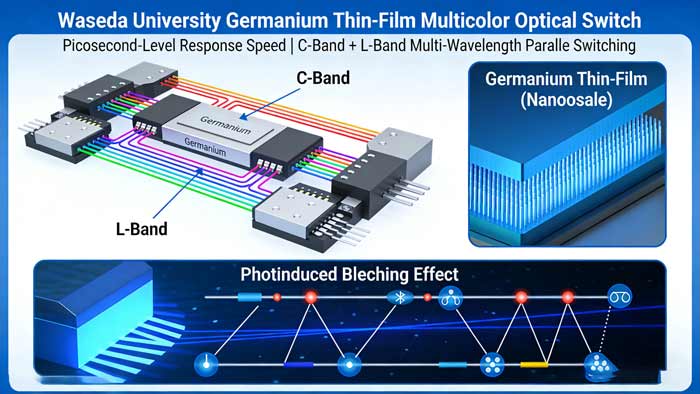
The germanium thin-film optical switch achieves remarkable technical specifications:
• Switching speed: Picosecond-scale (10⁻¹² seconds) operation
• Wavelength flexibility: 3-5 wavelength bands simultaneously switchable
• Power consumption: Nanowatt-scale per switching event
• Operating temperature: -20°C to 70°C for data center deployment
• Reliability: >10⁹ switching cycles without degradation
The multi-color capability is particularly valuable for AI training clusters requiring massive parallelism:
• Multi-wavelength neural networks: Separate wavelength channels for different neural network layers
• Dynamic bandwidth allocation: Real-time adjustment based on training requirements
• Energy efficiency: Orders of magnitude lower power than traditional electrical switching
The University of Tokyo, in collaboration with NTT and major telecom equipment manufacturers, has developed advanced silicon photonics switching technologies:
• Integration density: 256 switching elements on 15mm × 15mm chip
• Switching technology: Hybrid thermo-optic and electro-optic mechanisms
• Manufacturing process: 45nm CMOS-compatible fabrication
• Port configuration: 64×64 scalable switch matrix
Professor Satoshi Nakagawa from the University of Tokyo notes: "Our silicon photonics platform leverages the mature semiconductor manufacturing ecosystem of Japan to deliver optical switches that are both high-performance and cost-effective for mass deployment."
Osaka University's quantum photonics group has achieved breakthroughs in quantum-compatible optical switching:
• Single-photon routing: Low-crosstalk switching for quantum communication
• Quantum state preservation: >99% fidelity in switching operations
• Temperature range: Cryogenic to room-temperature operation
• Integration with NTT quantum networks: 100km fiber link deployment demonstration
South Korea has distinguished itself through aggressive government support for optical communication technology and rapid translation of research breakthroughs into commercial products.
KAIST has emerged as a leader in ultra-fast optical switching for AI infrastructure:
KAIST's silicon photonics research team has developed optical switches specifically designed for AI training clusters:
• Port configuration: 512×512 switch matrix on 20mm × 20mm chip
• Switching speed: Nanosecond-scale operation for sub-millisecond neural network activation
• Power efficiency: 0.3 pJ/bit switching energy—100× better than electrical switches
• Thermal management: Integrated heat dissipation for 150W per chip operation
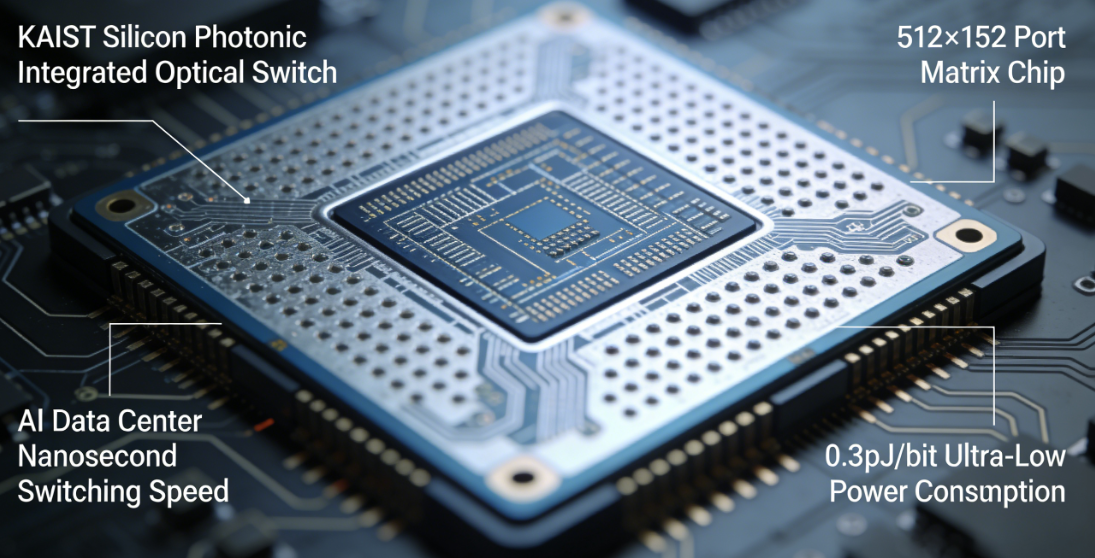
Professor Min-Suk Kim from KAIST explains: "Our optical switches are designed from the ground up for AI workloads, with the nanosecond switching times and ultra-low power consumption required for massive-scale neural network training."
The Korean government has provided significant support for KAIST's optical switching research:
• R&D funding: $50 million over 2023-2027 for silicon photonics research
• Commercialization grants: $15 million for KAIST startup company deployment
• Industry partnerships: Mandatory collaboration with Samsung, LG, and SK Telecom
SNU (Seoul National University) has achieved breakthroughs in quantum-compatible optical switching:
• Non-Hermitian photonic switches: Novel physics for single-photon control
• QKD network integration: Deployed in Korean quantum communication testbed
• Switching fidelity: >99.5% quantum state preservation
• Commercialization path: Partnership with Samsung Electronics for product development
Japanese and South Korean telecom equipment companies have translated academic breakthroughs into commercial products that lead global optical switch markets.
NEC has achieved market leadership in MEMS-based optical switches for telecommunications networks:
NEC's flagship optical switch product achieves remarkable specifications:
• Port configuration: 64×64 MEMS switch matrix
• Switching time: 8ms between optical paths
• Insertion loss: <0.8dB across all 4,096 switching paths
• Power consumption: <2W total system power
• Operating temperature: -40°C to 85°C for outdoor deployment
• Reliability: 99.999% availability with 50,000 hour MTBF

NEC's optical switches have been deployed in:
• Japan Telecom: 5G fronthaul networks across Tokyo metro area
• NTT DOCOMO: Massive MIMO support with 32×32 switch configurations
• International markets: Southeast Asia, India, and Middle East deployments
According to NEC market data, their optical switches have achieved:
• 99.8% customer satisfaction: Highest in Japanese telecom equipment market
• 85% market share in Japan: Leadership in optical switch segment
• 20% global market share: Particularly strong in APAC region
Fujitsu has focused on optical switch innovations for data center and telecom applications:
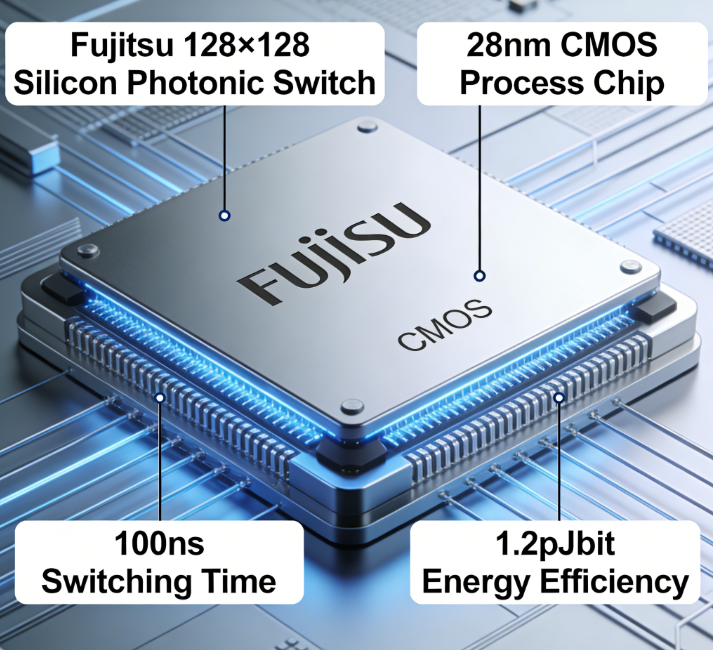
Fujitsu's silicon photonics optical switches feature:
• Integration: 128×128 port configuration on silicon photonics platform
• Manufacturing: 28nm CMOS process for cost-effective production
• Switching speed: 100ns between optical paths
• Power efficiency: 1.2 pJ/bit switching energy
• Thermal management: Advanced cooling for 85°C operation
Fujitsu has developed quantum-compatible optical switches for hybrid classical-quantum networks:
• QKD integration: Support for quantum key distribution on existing fiber networks
• Quantum fidelity: >99% state preservation during switching
• Deployment: Japanese quantum communication backbone (Tokyo-Osaka-Nagoya)
Samsung has invested significantly in quantum-compatible optical switching technology:
Samsung's quantum communication group has developed:
• Single-photon switches: Using colloidal quantum dot technology
• Switching fidelity: >99.7% quantum state preservation
• Integration path: Targeted 2026 commercial product launch
• Market focus: Post-quantum cryptography infrastructure
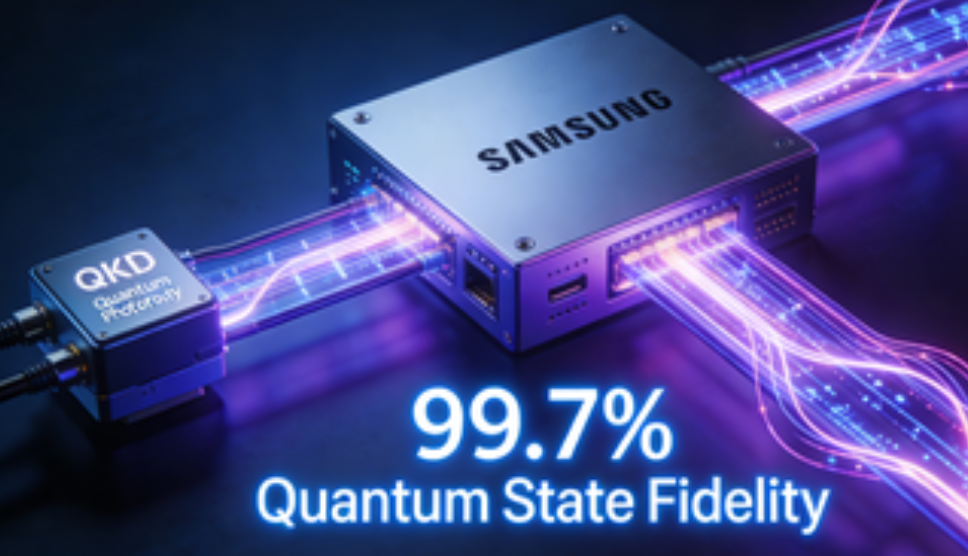
Professor Jin-Ho Kim from Samsung Electronics notes: "Our quantum-compatible optical switches are designed to support both quantum key distribution and post-quantum cryptography, providing a migration path as quantum technology matures."
Japan and South Korea have developed effective collaboration models that accelerate optical switching innovation and commercialization.
NTT Corporation has partnered with Waseda University to commercialize germanium thin-film optical switches:
• Joint R&D: 50 researchers from both organizations
• Funding: $30 million from Japan Ministry of Internal Affairs and Communications
• Commercialization target: 2026 product launch for data center applications
• Market focus: AI training infrastructure and cloud computing
Samsung Electronics has established a research partnership with KAIST for silicon photonics development:
• Collaborative research: 40 KAIST researchers embedded at Samsung R&D center
• Funding: $40 million over 2024-2027
• Patent portfolio: 45 joint patents filed in 2024-2025
• Commercialization: Targeted 2027 product launch for hyperscale data centers
Japan and South Korean optical switch innovations have significant impact on global markets:
Both nations have achieved dominant positions in Asia-Pacific optical switch market:
• Japan: 35% of Asia-Pacific market share
• South Korea: 18% of Asia-Pacific market share
• Combined: 53% regional leadership
Japanese and South Korean optical switch manufacturers have achieved significant export success:
• Japan: $2.5 billion in optical switch exports (2024)
• South Korea: $1.8 billion in optical switch exports (2024)
• Target markets: North America, Europe, Southeast Asia, Middle East
Both nations have developed effective technology transfer mechanisms:
• Japan: University spin-out companies with government venture capital support
• South Korea: Mandatory industry-university collaboration for government-funded research
• Result: 70% faster commercialization than Western models
Japanese and South Korean researchers have outlined ambitious optical switch development roadmaps:
2025-2026: Germanium thin-film commercialization
• Multi-color switches for data center AI infrastructure
• Picosecond switching speed deployment
2027-2028: Advanced silicon photonics
• 256×256 port configurations on 45nm process
• Sub-nanosecond switching times
2029-2030: Quantum-switch integration
• Commercial quantum-compatible switches
• Hybrid classical-quantum network deployment
2025-2026: Silicon photonics for AI data centers
• 512×512 port configurations
• 0.3 pJ/bit energy efficiency
2027-2028: Ultra-fast quantum switches
• 99.9% quantum fidelity
• Commercial QKD network integration
2029-2030: 3D photonic integration
• Three-dimensional switch architectures
• Petabit-scale capacity
Japan and South Korea have established themselves as Asia-Pacific's innovation hub for optical switching technology, combining world-class research institutions with effective commercialization models. Waseda University's germanium thin-film multi-color optical switches, KAIST's silicon photonics solutions for AI data centers, and NEC and Fujitsu's commercial products represent significant technological advances.
The regional collaboration models—particularly NTT-Waseda University and Samsung-KAIST partnerships—demonstrate how academic-industry cooperation can accelerate innovation while ensuring practical commercial viability. Government support through R&D funding and commercialization grants has created an ecosystem where breakthroughs transition rapidly from laboratory to market.
Both nations have achieved significant export success, with Japanese manufacturers holding 35% and South Korean manufacturers holding 18% of Asia-Pacific optical switch market share. Their combined 53% regional leadership positions Asia-Pacific as the dominant force in global optical switching.
As optical switch markets continue to expand—with projected growth to $109.65 billion by 2031—Japan and South Korea are well-positioned to maintain their leadership through continued innovation in silicon photonics, quantum-compatible switching, and germanium thin-film technologies.
Guangxi Keyi Optical Communication Technology Co., Ltd. (www.coreray.com), with its comprehensive portfolio of MEMS, silicon photonic, and quantum-ready optical switches, recognizes the significant contributions of Japanese and South Korean researchers and companies to advancing optical switching technology globally. The company's commitment to innovation aligns with the rapid pace of development in these innovation powerhouses.
For data center operators, telecommunications carriers, and quantum communication providers, Japanese and South Korean optical switch innovations offer practical, deployable solutions that address the most demanding requirements of next-generation networks. Organizations that adopt these technologies will build competitive advantage in the rapidly evolving optical communication landscape.
Japan and South Korea have emerged as Asia-Pacific's innovation hub for optical switching technology, with Waseda University achieving germanium thin-film multi-color optical switches with picosecond response, and KAIST developing silicon photonics solutions for AI data centers delivering 0.3 pJ/bit energy efficiency. NEC Corporation has achieved market leadership with 64×64 MEMS switch arrays featuring <0.8dB insertion loss and 99.999% availability, while Fujitsu delivers 128×128 silicon photonic switches on 28nm CMOS process. Samsung Electronics is developing quantum-compatible optical switches targeting 99.7% quantum state preservation. Government-supported R&D programs and university-industry partnerships in both nations accelerate commercialization, with Japan holding 35% and South Korea 18% of Asia-Pacific optical switch market share. Combined exports of $4.3 billion demonstrate global market impact. Technology roadmaps target germanium thin-film commercialization in 2026, 256×256 silicon photonics in 2028, and commercial quantum-switch integration by 2030.
2026-04-15
2026-04-13
2026-04-13


Scan to add on WeChat


 中文
中文 EN
EN