
TOP
 Home > News
2026-02-26
In the rapidly evolving field of photonics, the ability to precisely control and simulate optical signal propagation is paramount for research, development, and manufacturing. Whether characterizing a new transceiver or calibrating a distributed fiber optic sensor, engineers often need to recreate the effects of long-distance transmission in a compact lab environment. This is where a programmable optical delay line (ODL), built around reliable switch technology, becomes an indispensable tool.
As a premier fiber optic switch manufacturer, Coreray specializes in creating solutions that bridge the gap between theoretical design and practical application. Our 4-Channel Variable Optical Delay Line, based on cascaded 2x2B mechanical optical switch technology, offers a case study in how robust hardware can solve complex testing challenges. This article explores the technical benefits and applications of using such a device.
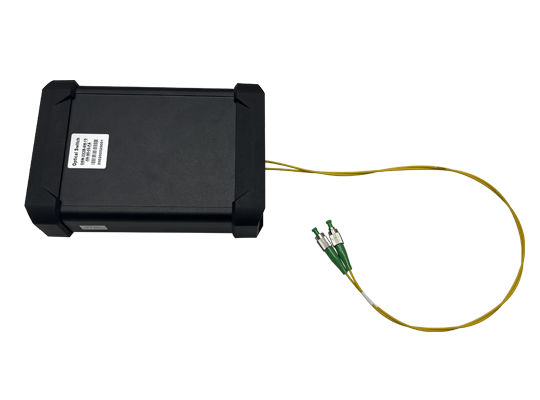
Traditional delay lines often offer a single, fixed length of fiber. While simple, this approach lacks the flexibility required for modern R&D. A programmable ODL, by contrast, allows the user to dynamically select from multiple discrete delay paths. This is achieved by integrating several optical switch stages with precisely cut lengths of fiber.
In our module, four 2x2B mechanical switches are cascaded. Unlike some technologies, mechanical optical switch solutions offer distinct advantages for this application:
High Isolation: They inherently provide excellent cross-talk performance (≥50dB), ensuring that signals from different delay paths do not interfere. This is critical when measuring weak signals or performing high-precision timing analysis.
Low Insertion Loss: Mechanical switches offer some of the lowest insertion losses available, preserving signal integrity even after passing through multiple switch states and long fiber lengths.
Non-Volatile Operation: The latching relay design maintains the selected optical path even without power, ensuring the stability of your test setup.
The core principle of an optical delay line is simple: light takes time to travel through fiber (approximately 5ns per meter). By routing a signal through different lengths of fiber, you introduce a corresponding time delay. Our module uses a binary-weighted configuration (4m, 8m, 16m, 32m). This allows an engineer using an optical switch China-based ODL to create 16 distinct delay states, from 0 to 60 meters, by simply sending serial commands via RS232.
Consider a lab developing a high-precision FOG. The gyroscope's sensitivity is directly related to the length of fiber in its sensing coil. Testing the full dynamic range of the FOG's electronics would normally require multiple coils or an impractical spool of fiber kilometers long.
By placing our programmable ODL in the optical path before the sensing coil, engineers can:
1. Simulate Different Coil Lengths: They can instantly switch between 4, 8, 16, or 32 meters of delay to test the signal processor's response to varying time-of-flight.
2. Characterize Component Latency: They can measure the precise latency introduced by other components in the system by establishing a baseline with the ODL set to "0" and then comparing it to known added delays.
3. Automate Testing: The RS232 control allows the entire calibration sequence to be automated, running through all 16 delay states in seconds and recording the system's output for each, vastly speeding up the development cycle.
To maximize the performance of a programmable ODL in your setup, consider the following:
1. Connector Quality: Always use high-quality, clean connectors. Our module uses FC/APC connectors to minimize back reflections, which is especially important in high-precision applications like sensing.
2. Wavelength Matching: Ensure the ODL is specified for your operating wavelength. Our standard module is optimized for the 1550nm telecom C-band, a common window for both communication and sensing.
3. Control Software: Leverage the programmability. Integrating the ODL's control into your automated test scripts (using Python, LabVIEW, etc.) unlocks its full potential for repetitive testing and characterization.
As optical systems become more sophisticated, so too must the tools used to test them. Programmable optical delay lines, built on the reliable foundation of mechanical optical switch technology, provide engineers and researchers with the precision and flexibility needed to innovate faster and with greater confidence. Whether for simulating vast distances in fiber sensing or performing detailed component analysis, this technology represents a critical investment for any forward-thinking photonics lab.
For more information on custom optical switch solutions and delay lines, please contact Coreray Optical Communication, your trusted partner for high-quality photonic components.
2026-04-15
2026-04-13
2026-04-13


Scan to add on WeChat


 中文
中文 EN
EN